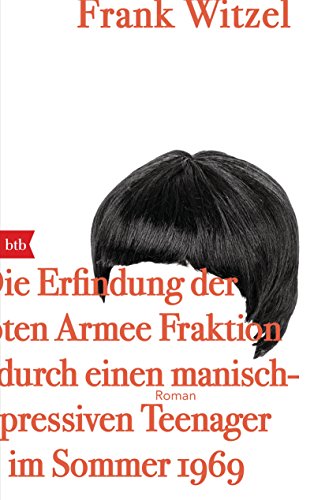
Die Erfindung der Roten Armee Fraktion durch einen manisch-depressiven Teenager im Sommer 1969
by Frank Witzel
Approximately 817 pages
This novel offers a challenging yet rewarding exploration of a tumultuous period through a unique lens.
Difficulty
Challenging
Pace
Measured
Mood
experimental, darkly humorous
Book club
Medium
Is this book for you?
Read this if you enjoy
- complex narratives
- historical fiction with a twist
- explorations of youth and rebellion
Consider another book if
- you prefer straightforward plots
- you are sensitive to themes of mental illness
- you dislike experimental writing
What it is about
"Die Erfindung der Roten Armee Fraktion durch einen manisch-depressiven Teenager im Sommer 1969" explores the life of a teenager grappling with mental health issues during a politically charged summer. The narrative intertwines personal struggles with the historical context of 1969 West Germany. The protagonist's experiences reflect the societal tensions of the time, including the rise of radical movements.
Witzel employs a fragmented narrative style, mirroring the protagonist's state of mind. The novel delves into themes of identity, rebellion, and the impact of historical events on individual lives. It also examines the influence of media and culture on youth.
The story is marked by a blend of reality and fiction, blurring the lines between personal and political. Witzel's work engages with the complexities of adolescence amidst turmoil. The characters are shaped by their environment, revealing the interplay between personal and collective histories.
Ultimately, the novel offers a poignant reflection on the nature of memory and the formation of ideologies.
Award recognition
2015 winner
German Book Prize
Germany
Reader comments
Loading comments…
Similar award-winning books
Selected from shared categories, regions, award history, and reading profiles.
Die Hauptstadt
by Robert Menasse
Also recognised in fiction.
L'Ordre du jour
by Éric Vuillard
Also recognised in fiction.
Le otto montagne
by Paolo Cognetti
Shares themes of identity.